
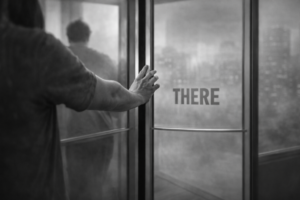
The experience was real. You know that.
The separation dissolved. The self that had been defending and managing and bracing dropped away. Life moved through without resistance. Whatever you want to call what was there — it was undeniable.
Then the medicine wore off. Ordinary life returned. The old patterns reassembled. And when you reached for what you found — when you tried to get back to that place — you couldn’t find the entry point.
This isn’t unusual. It’s the most common experience in psychedelic work. And it has a precise explanation.
What the medicine actually did
Plant medicine doesn’t create the opening. It removes the obstruction.
The bracing — the nervous system’s habitual defense against anticipated threat — temporarily drops. The self that was defending dissolves because it was the bracing. When the bracing goes, there’s nothing left to maintain the sense of a separate someone managing experience.
The door was always open. The medicine lowered the wall that was blocking it.
That’s why the experience felt like recognition rather than discovery. You weren’t finding something new. You were finding what had been there all along, behind the defense layer.
Why it fades
The medicine wears off. The nervous system’s threat-prediction machinery comes back online. The bracing returns. The wall rebuilds.
Here’s the precise reason integration is so difficult: the threat prior — the nervous system’s learned prediction that certain internal sensations mean danger — was never tested under activation without the medicine.
You had the experience of the prior loosening. But you never ran the check under full activation and found nothing there. So when ordinary life returns and the alarm fires at full volume, the prior reasserts. The bracing returns. The wall is back.
The medicine created conditions for the discovery. It didn’t create the repeatable proof that the discovery holds when the alarm is loudest.
That’s the integration gap. And it’s not a failure of the medicine or the facilitator or you. It’s a structural problem: the route was created by the absence of the alarm. Which means the route disappears when the alarm returns.
What portable integration looks like
The medicine shows you what it’s like when the door is open. That’s irreplaceable. You know something is available. You know the direction.
What’s missing is a way to reach the same discovery when the alarm is loud. Not when conditions are favorable. When they’re not.
That requires running the check under activation. When the alarm is firing at full volume and something is actually at stake. When the self is fully committed to defending something specific.
That’s precisely when the signal is strongest. And that’s when the check produces the clearest result.
Picture the worst story your nervous system is running right now. The verdict. The thing about to land. See it out in front of you. Let it come toward you at full speed. Follow the felt sense of impact inward — all the way to the center. What’s there?
Nothing. No receiver. No edge. Nothing that could be hit.
The medicine showed you that once, when the bracing was chemically removed.
The check shows you the same thing, under activation, with the bracing fully running — and finds nothing anyway.
That’s the route. Not back to the medicine state. Through the alarm that’s running right now.
Run it enough times and the nervous system updates at the level where the prior was installed. The alarm still fires. But its track record of accurate threat detection becomes terrible. And it starts to lose its grip.
Experience you lose becomes route you can repeat.
The app runs this check directly — under activation, without requiring the alarm to be quiet first. If something is live right now, that’s the right moment.